
The Questions We're Not Supposed to Ask About Equity (But Everyone's Thinking)
Our blog is a space to explore the hard questions that move organizations toward real change. Grounded in the belief that racial equity must live in both culture and daily practice, we share stories, tools, and reflections that help bridge values with action. From internal leadership shifts to community-rooted strategies, we highlight the everyday work of building racial equity, one decision, one relationship, one breakthrough at a time.
December's blogging prompt comes from Heidi.
Let's skip the careful language and get honest: we're exhausted. As 2025 winds down, those of us doing equity work are tired of the relentless assaults on democracy, tired of stretching ourselves impossibly thin to keep our communities whole, and tired of contorting our work into unrecognizable shapes just to survive. So consider this an invitation to the conversation that usually only happens after hours, the one with unpolished truths and questions we're not supposed to ask out loud. You know the ones: they live in hallway whispers and quiet moments of frustration, sitting at the very center of our work yet somehow never making it into strategy decks. This space is for naming questions related to equity openly and to tell the truth. Blame isn't assigned when we tell the truth.
If it’s “legal” but harmful, why are we still defending it?
Why do BIPOC staff keep training white colleagues who end up managing them?
Why are Black women trusted to do the direct service work but rarely tapped to lead?
Why do we obsess over recruitment and ignore retention?
Where did the Black staff go, and who benefits from their disappearance?
Can we finally talk about racial pay equity?
Why does naming whiteness trigger defensiveness instead of responsibility?
If racial equity is the goal, why do white-led institutions still control the timeline, strategy, and definition of success?
Why does speaking honestly about anti-Blackness carry professional risk, even in spaces that claim to value equity?
Why are BIPOC leaders welcomed until our leadership disrupts comfort, pace, or control?
Why do organizations invest more in equity language and training than in shifting real decision-making power?
Are institutions actually willing to give up power—or do they just want proximity to BIPOC leaders without real change?
How many equity-focused positions have we hired, celebrated, then ignored when they asked for real resources or change?
What part of our equity work is designed to be seen, not to change outcomes?
When equity became politically risky, how fast did our initiatives disappear, and what does that say about whether we ever meant any of it?
Have we done a single thing our wealthiest donors objected to, or is our equity work designed never to threaten the people who fund us?
If litigation risk blocks analysis of racial pay and promotion gaps, what would the data expose if we had to release it?
How many people of color did we extract labor from to lead equity work, only to abandon them when it got hard or controversial?
Are we using equity language to pacify employees while our business practices extract wealth from the communities we claim to support?
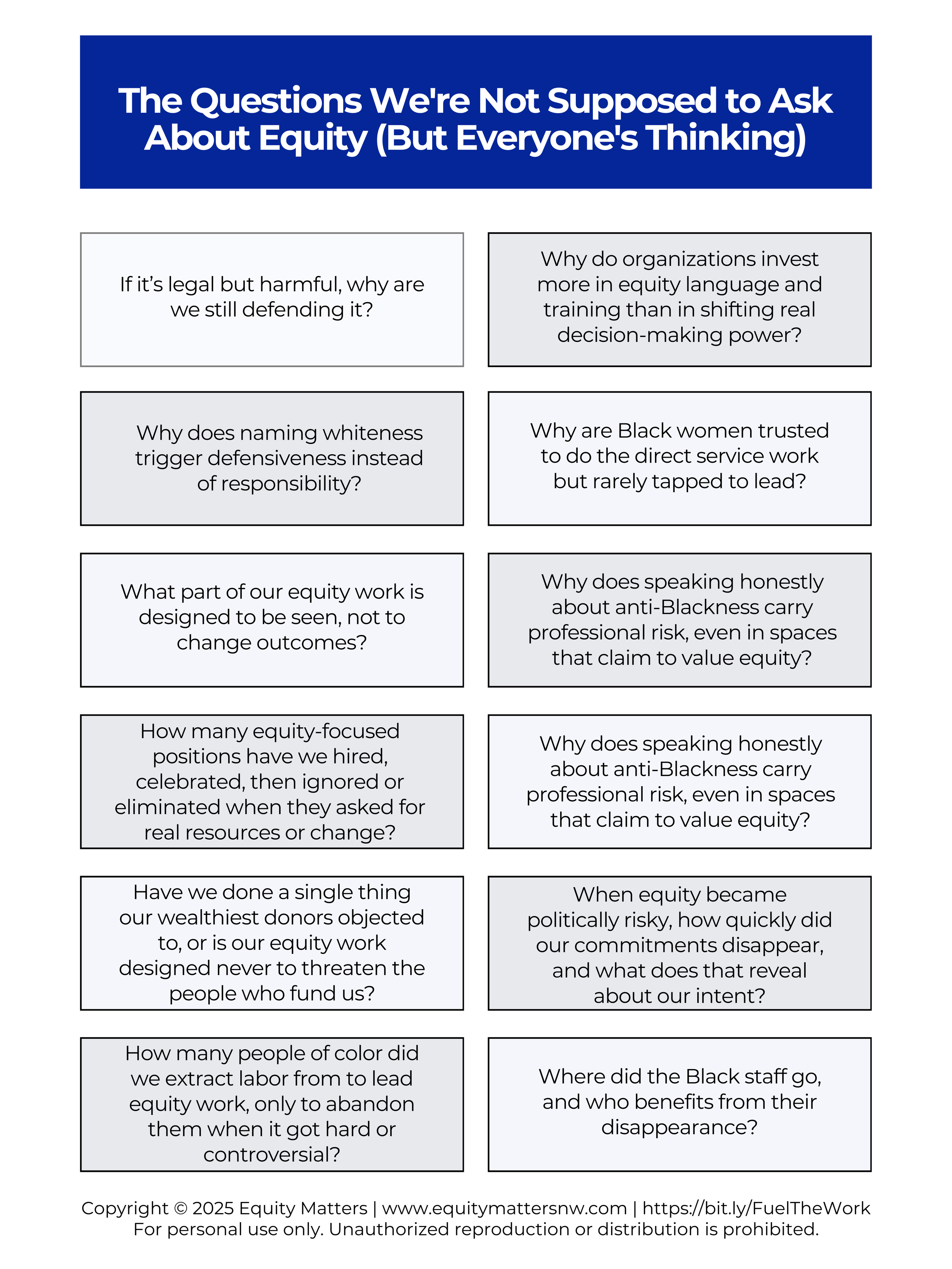
Here are our twelve favorite questions. You can download a copy here.
If our equity tools, blog posts, or shared resources have added value to your work, consider leaving a contribution. Your support powers this work and fuels the creation of more racial justice-focused tools.